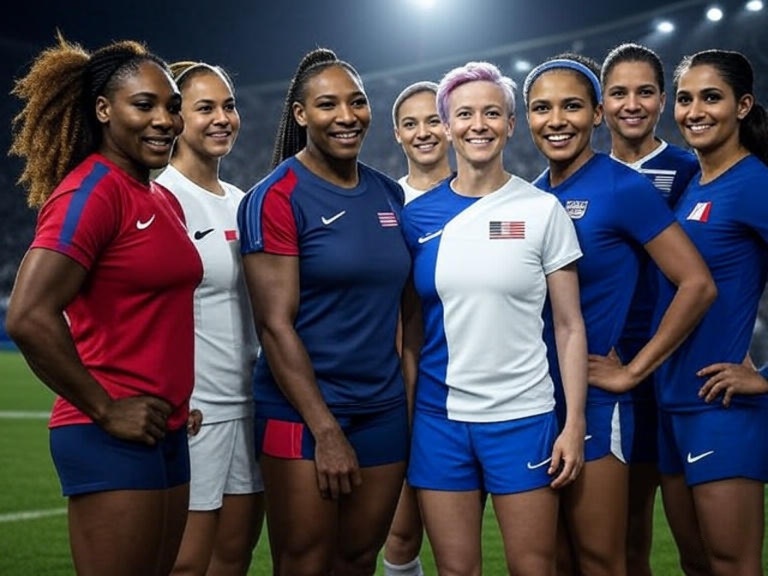
A Global Shift in the Game
In the past decade, women in sports have not only rewritten record books but redefined societal norms. From football fields to fighting rings, from Olympic tracks to cricket grounds, women have been breaking barriers at a historic pace. Between 2010 and 2025, this transformation has accelerated, fueled by advocacy, policy reform, media evolution, and undeniable talent.
This article chronicles the journey of women athletes over the past 15 years — exploring advancements in pay equality, media representation, training access, and global impact — with inspiration drawn from trailblazers like Serena Williams, Megan Rapinoe, and Sania Mirza to emerging stars from Africa, Asia, and Latin America.
1. The Rise of Women in Global Sports (2010–2025)
The early 2010s marked the beginning of a tectonic shift. Events like the 2012 London Olympics, where women competed in every sport for the first time in Olympic history, set a precedent. By 2024, women comprised nearly 49% of all Olympic participants, according to the International Olympic Committee (IOC).
UN Women, in its annual gender equality reports, consistently emphasized the link between sports and female empowerment. National governments and global organizations began investing more seriously in girls’ sports programs.
Participation Growth: Female participation in sports rose by over 50% from 2010 to 2025 globally.
Media Impact: By 2023, coverage of women’s sports reached 15% of total sports media time — a threefold increase since 2010.
Policy Progress: IOC’s 2018 Gender Equality Review Project influenced multiple federations to adopt fairer policies.
2. Breaking Pay Barriers: Toward Equal Compensation
For decades, one of the most contentious issues was the pay gap between male and female athletes. In recent years, several landmark developments have reshaped the financial landscape:
Football: FIFA Women’s World Cup
The 2019 and 2023 Women’s World Cups brought global attention to gender pay inequality.
Despite generating millions in revenue, prize money remained disproportionately lower than the men’s tournament. However, sustained pressure — especially from U.S. players like Megan Rapinoe and Alex Morgan — led to changes:
2022: U.S. Soccer Federation announced equal pay for men’s and women’s teams — the first federation in the world to do so.
2023 FIFA Women’s World Cup: FIFA committed $110 million in prize money — nearly triple the 2019 amount.
Tennis: Equal Prize Money Trailblazer
Tennis has long been a leader in equal pay. Thanks to advocacy from legends like Serena and Venus Williams, all four Grand Slam tournaments now offer equal prize money.
Serena’s dominance (23 Grand Slam singles titles) not only challenged stereotypes but brought mainstream attention and high sponsorships to women’s tennis.
Other Notable Examples:
Cricket: In 2022, the BCCI (India\’s cricket board) pledged equal match fees for male and female players.
UFC: Fighters like Ronda Rousey broke revenue records and led the way for female headline events
3. Media Visibility and the Battle for Coverage
Media plays a pivotal role in shaping public perception — and for years, women’s sports were significantly underreported. From 2010 to 2025, the situation has improved but still has room to grow.
Milestones in Media Representation:
ESPNW (2010 launch): Dedicated women’s sports platform by ESPN.
BBC’s 2022 Women in Sport report: Women’s coverage on BBC grew by 70% from 2015 to 2022.
Streaming Platforms: Services like DAZN and YouTube have hosted exclusive women’s events, bypassing traditional gatekeepers.
Social Media’s Influence:
Female athletes like Naomi Osaka, Simone Biles, and Megan Rapinoe command millions of followers, using their platforms to highlight inequalities, share personal struggles, and promote mental health — empowering the next generation.
4. Trailblazers Who Redefined Sport
Serena Williams (USA – Tennis)
Arguably the most dominant female athlete of the 21st century, Serena’s journey from Compton to Wimbledon became a symbol of perseverance. Her influence extends far beyond tennis, inspiring movements in business, fashion, and equity.
Achievements: 23 Grand Slam singles titles, 4 Olympic golds.
Impact: Advocate for maternal health, racial equality, and gender pay.
Megan Rapinoe (USA – Soccer)
Rapinoe redefined activism in sports. Her leadership in the 2019 World Cup, where she won both the Golden Boot and Golden Ball, coincided with her advocacy for LGBTQ+ rights and equal pay.
Legacy: Helped secure the U.S. women’s national team’s historic equal pay agreement in 2022.
Sania Mirza (India – Tennis)
One of the most recognized athletes in South Asia, Mirza broke barriers not just in sports but in conservative gender roles.
Milestones: First Indian woman to win a WTA title; six-time Grand Slam champion (doubles/mixed).
Impact: Opened the door for Indian and Muslim girls in global sport.
5. Continental Growth: A Closer Look
Africa: Resilience and Triumph
Athletes like Caster Semenya (South Africa) and Asisat Oshoala (Nigeria) put African women on the global sports map.
Challenges: Infrastructure, gender norms, and lack of funding.
Growth: Increased investment by CAF and Olympic scholarships for African women have changed the tide.
Asia: Momentum Builds
With powerhouses like China, Japan, and India pushing the envelope, Asia has seen a steady rise in female champions.
Examples: PV Sindhu (India – Badminton), Sifan Hassan (born in Ethiopia, representing the Netherlands), and Eri Yonamine (Japan – Cycling).
Latin America: Breaking Machismo Culture
Machismo has long hindered women in Latin America from achieving parity. However, stars like Marta (Brazil – Soccer) and Mariana Pajón (Colombia – BMX) are rewriting this narrative.
Impact: The 2022 Copa América Femenina reached record viewership numbers.
Youth Programs: FIFA and CONMEBOL are investing in grassroots girls’ football.
6. Barriers Still to Break
While there’s progress, challenges remain:
Leadership & Coaching Roles:
Women hold only 13% of top coaching roles in elite sports globally (UN Women, 2024).
Media Inequity:
Despite gains, women’s sports receive less than 20% of total sports coverage in 2025.
Safety & Harassment:
IOC and UN Women call for stronger enforcement of protection against abuse, especially in youth and amateur sports.
7. Innovations in Training and Access
Sports science has played a crucial role in enhancing performance and reducing injuries. In recent years, female-focused research has improved access and training outcomes.
Period Tracking and Training: Olympic teams like the UK and Canada incorporated menstrual cycle tracking to optimize performance.
Maternity Provisions: Sponsorships (like Nike’s revised maternity policy in 2020) now support athletes before and after childbirth.
8. Women-Led Leagues and Organizations
New women-centric leagues are changing the game
WNBA (USA): Continues to grow in popularity and revenue.
Women’s Super League (UK Football): Rapid expansion with broadcast deals.
Women’s Premier League (India – Cricket): Launched in 2023 with major franchise backing and sold-out stadiums.
These leagues are proof that when women are given the stage, they deliver — commercially and competitively.
9. The Role of Institutions and Advocacy Groups
Organizations like the Women’s Sports Foundation and UN Women have pushed relentlessly for equity.
Key Reports & Programs:
IOC Gender Equality Review Project (2018): 25 recommendations, including equitable funding, media, and leadership.
UN Women’s “Sports for Generation Equality” Initiative (2020–2025): Leveraged sports to drive gender reform worldwide.
10. A Future Defined by Equity and Opportunity
The past 15 years were transformative, but the next 15 hold even greater promise. With continued investment, education, and media reform, the future could yield parity in every domain of sport.
What’s Needed:
Investment in Youth Sports: Especially in developing countries.
Female Leadership: From club boards to international federations.
Inclusive Narratives: Media must frame female athletes as athletes — not exceptions.
Conclusion: A Movement, Not a Moment
The rise of women in sports from 2010 to 2025 is more than a historical trend — it’s a revolution that redefined what’s possible. With every record shattered, every barrier broken, and every voice raised, women athletes are not just making headlines — they’re making history.
And as this movement expands, it paves the way for future generations of girls who will no longer have to ask if they belong in sports — they’ll know they do.